What are Sci-Fi Apps?
Apps that work equally well on mobile, desktop, and in spatial environments — augmented and virtual reality — with futuristic UI that up until recently would only be featured in Sci-Fi movies.
For most of computing, the interface was a rectangle. A window. A tab. A feed. You sat in front of it or held it in your hand, and the software stayed inside the frame. Sci-Fi apps start from the opposite premise: the interface is space. Information lives on an infinite canvas, on a globe, on a cube you can turn. The same surface works on a phone in your hand, a laptop on a desk, and a headset in AR or VR — without rebuilding the product for each.
What makes an app “Sci-Fi”
- Spatial by default — the primary interface is 3D space, not a 2D document. You move through it, not scroll down it.
- One surface, every device — mobile, desktop, and XR share the same spatial grammar. The app is not ported between them; it is the same product expressed across screens of different size.
- Futuristic UI — glassy panels, floating nodes, ambient motion. The visual language that science fiction spent decades establishing as “the future,” except it actually works.
- Sovereignty first — memory you own, models you run, tools that answer to you. Public only by choice. The cloud is optional, not structural.
None of that is decoration. The spatial interface exists because the things it holds — memory, time, music, a life — are spatial. A flat list loses the relationships. Space keeps them.
The four Sci-Fi apps so far
Sci-Fi Labs is the frame for a small set of apps that share this design language. Four are live now. Each one takes a domain that used to be flat and makes it spatial.
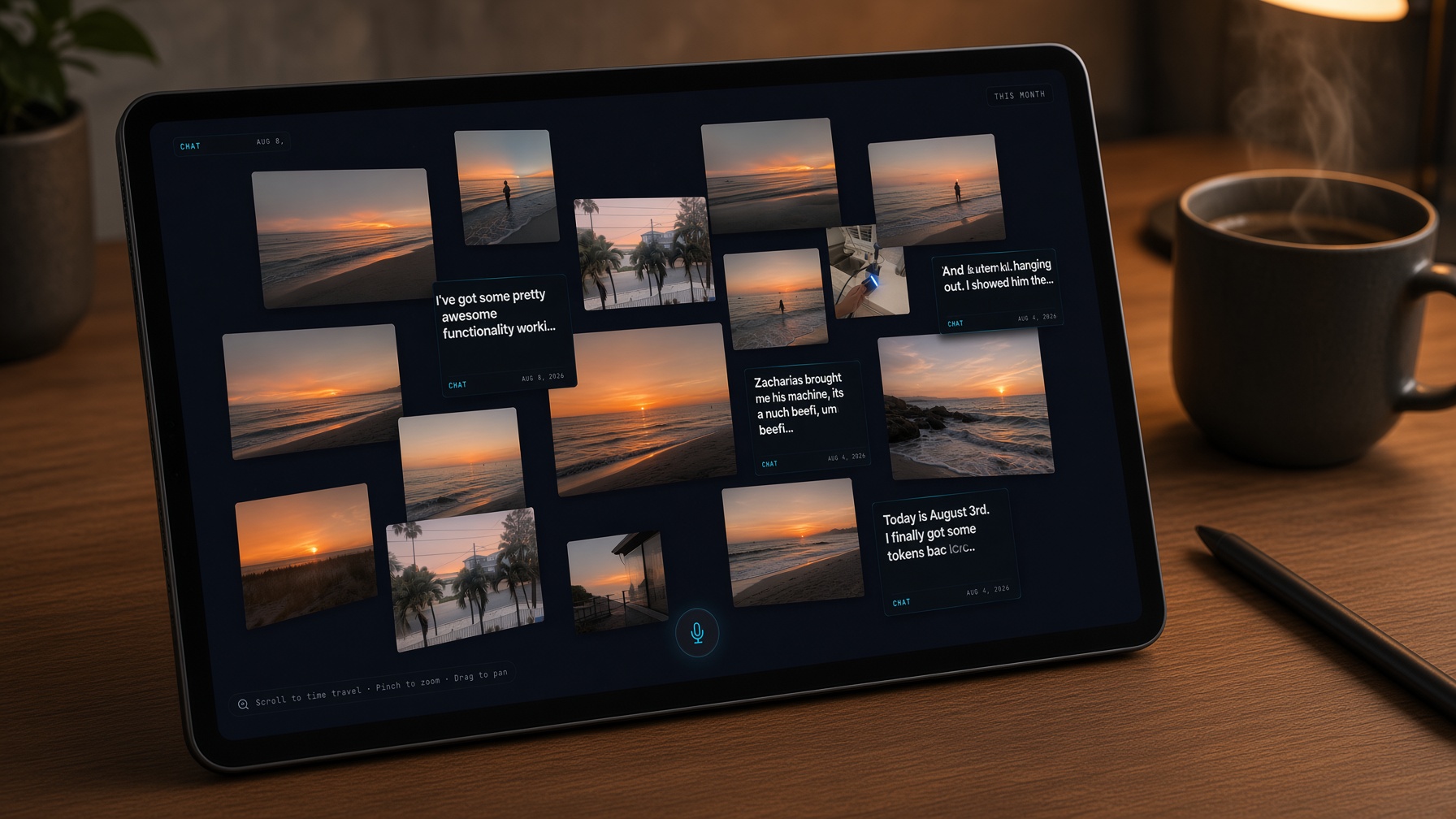
Knowledge Graph — sovereign memory
Not a chatbot. A memory palace you explore — on hardware you own. Conversations, photos, and voice notes live as floating elements on an infinite canvas of time. Scroll to move through days and months. Speak to query or add. Everything runs locally on your own machine: an on-device LLM, vision, Whisper, embeddings, and reranking on Apple Silicon. Entities and relationships are extracted from your own material and become a living graph you can walk through. Designed for web and local use now — with the same spatial language meant to extend into XR.
Read the Knowledge Graph post →
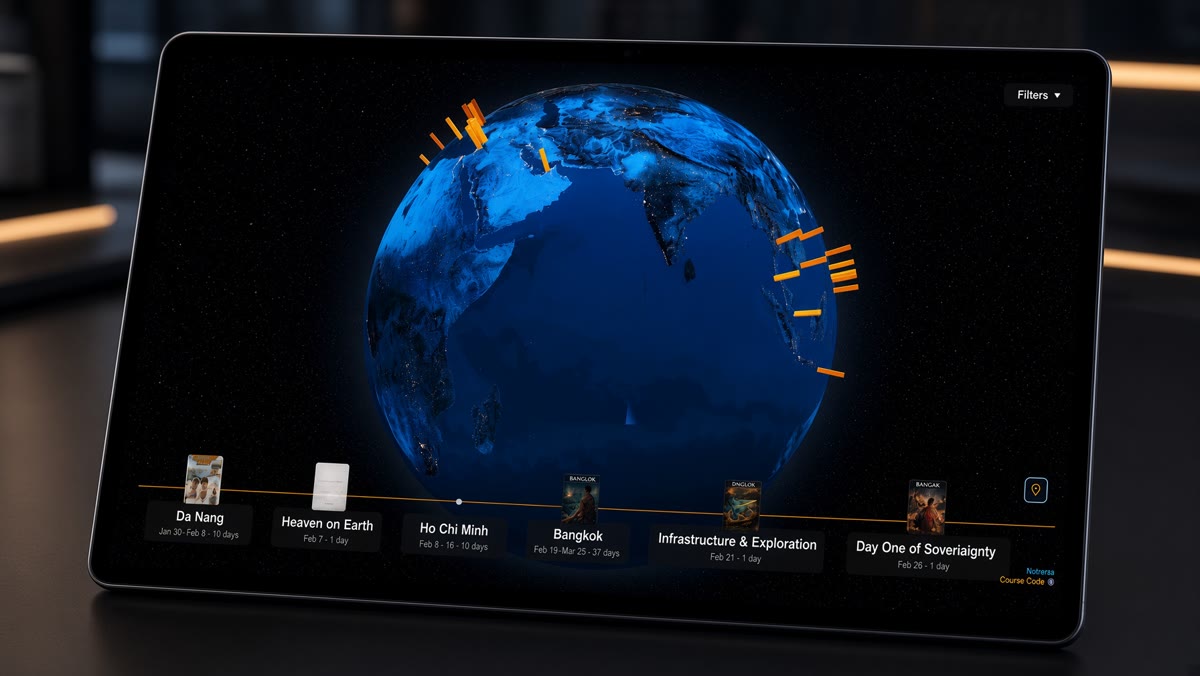
Where is Paul? — a spatial life map
A living spatial record of a life — a globe, a timeline, and stories that turn real moments into something navigable. Places, people, and time are first-class, not a feed and not a photo dump. Move through years and places as a continuous surface. Moments become nodes you can return to. Web-first, designed for the browser, with the same spatial grammar meant for XR. It is a Sci-Fi app for the record of a life — navigable in space and time.
Read the Where is Paul? post →
Musical Cubes — 3D music production
Music production as something you turn. Musical Cubes reimagines the timeline DAW as a set of tactile 3D cubes. Each cube is a track; each face is an instrument stem. Rotate to solo, mute, or rearrange. The same spatial language works on a phone in your hand and a browser on a desk — Ionic, React, and Capacitor give one product surface across web, PWA, and native mobile. Built so anyone can start making music without studying a DAW first: turn a cube, hear the change, layer sounds. The cube UI already scales cleanly into 3D space, the same way the other Sci-Fi Labs apps do.

Neuro Graph — memory as a network
The first attempt to map a life as a connected graph — people, places, activities, emotions, and moments in time, linked by synapses on a force-directed 3D canvas. Click a neuron to focus its cluster, drag to orbit, scroll to zoom. Temporal nodes orbit by date so you can see when memories formed. The public tier of a two-tier memory system: a curated subset published on a timeline you can explore, while raw transcripts, audio, and photos stay encrypted and air-gapped. Knowledge Graph later evolved this concept into a fully local, AI-driven memory palace — Neuro Graph remains the public face of the same lived experience.
What they share
- Space, not pages — each app replaces a flat surface (list, timeline, map pin) with a navigable space.
- One grammar across devices — mobile, desktop, and XR are the same product, not three ports.
- Local-first where it matters — memory and intelligence run on your hardware; the cloud is an option, not a dependency.
- Sci-Fi UI, for real — the floating, glassy, ambient aesthetic that movies promised, except it is the actual interface.
The common thread is that the interface was always the blocker. The models, the data, and the devices got there first; the software stayed flat. Sci-Fi apps are what software looks like once the interface catches up.
По време на по-голямата част от историята на компютрите интерфейсът беше правоъгълник. Прозорец. Таб. Страница. Седишь пред него или го държиш в ръката си, а софтуерът остава вътре в рамката. Sci-Fi приложенията тръгват от обратната предпоставка: интерфейсът е пространство. Информацията живее на безкрайно платно, на глобус, на куб, който можеш да завъртиш. Същата повърхност работи на телефон в ръката ти, на лаптоп на бюрото и на шлем в AR или VR — без продуктът да се пренаписва за всяко устройство.
Какво прави едно приложение „Sci-Fi“
- Пространствено по подразбиране — основният интерфейс е 3D пространство, а не 2D документ. Движиш се през него, не скролваш надолу.
- Една повърхност, всяко устройство — мобилно, десктоп и XR споделят един и същ пространствен език. Приложението не е пренесено между тях; то е един и същ продукт, изразен на екрани с различен размер.
- Футуристичен UI — стъклени панели, плаващи възли, амбиентно движение. Визуалният език, който научната фантастика десетилетия наред наричаше „бъдещето“, само че наистина работи.
- Суверенитет на първо място — памет, която притежаваш, модели, които пускаш, инструменти, които отговарят на теб. Публично само по желание.
Четирите Sci-Fi приложения досега
Sci-Fi Labs е рамката за малък набор приложения, които споделят този дизайн език. Четири са активни вече. Всяко взема домейн, който досега беше плосък, и го прави пространствен.
Knowledge Graph — суверенна памет
Не е чатбот. Паметен дворец, който изследваш — на хардуер, който притежаваш. Разговори, снимки и гласови бележки живеят като плаващи елементи на безкрайно платно от време. Скролвай, за да се движиш през дни и месеци. Говори, за да питаш или добавяш. Всичко работи локално на твоята машина.
Where is Paul? — пространствена карта на живота
Жив пространствен запис на един живот — глобус, времева линия и истории, които превръщат реални моменти в нещо навигируемо. Местата, хората и времето са първокласни, не страница и не снимки.
Musical Cubes — 3D музикална продукция
Музикалната продукция като нещо, което завърташ. Musical Cubes пренаписва DAW-а с времева линия като набор от тактилни 3D кубове. Всеки куб е песен; всяка страна е инструментален стем. Завърти, за да солираш, заглушиш или пренаредиш.
Neuro Graph — памет като мрежа
Първият опит да се картографира един живот като свързан граф — хора, места, дейности, емоции и моменти във времето, свързани чрез синапси върху 3D платно. Кликни върху неврон, за да фокусираш неговия клъстер, завлачи, за да орбитираш, скролвай, за да увеличаваш. Времевите възли орбитират по дата, за да видиш кога са се образували спомените. Публичният слой на двустепенна памет: избран набор, публикуван на времева линия, която можеш да изследваш, докато суровите транскрипти, аудио и снимки остават криптирани. Knowledge Graph по-късно разви тази концепция в локален, AI-управляван паметов дворец — Neuro Graph остава публичното лице на същия преживян опит.
Durante la mayor parte de la historia de la computación, la interfaz fue un rectángulo. Una ventana. Una pestaña. Un feed. Te sentabas frente a ella o la sostenías en la mano, y el software se quedaba dentro del marco. Las apps Sci-Fi parten de la premisa opuesta: la interfaz es el espacio. La información vive en un lienzo infinito, en un globo, en un cubo que puedes girar. La misma superficie funciona en un teléfono en la mano, un portátil en el escritorio y un casco en AR o VR — sin reconstruir el producto para cada uno.
Qué hace que una app sea “Sci-Fi”
- Espacial por defecto — la interfaz principal es espacio 3D, no un documento 2D. Te mueves a través de ella, no haces scroll hacia abajo.
- Una superficie, cada dispositivo — móvil, escritorio y XR comparten el mismo lenguaje espacial. La app no se portaea entre ellos; es el mismo producto expresado en pantallas de distinto tamaño.
- UI futurista — paneles de cristal, nodos flotantes, movimiento ambiente. El lenguaje visual que la ciencia ficción estableció durante décadas como “el futuro”, excepto que realmente funciona.
- Soberanía primero — memoria que posees, modelos que ejecutas, herramientas que te responden. Público solo por elección.
Las cuatro apps Sci-Fi hasta ahora
Sci-Fi Labs es el marco para un conjunto pequeño de apps que comparten este lenguaje de diseño. Cuatro están activas ahora. Cada una toma un dominio que solía ser plano y lo hace espacial.
Knowledge Graph — memoria soberana
No es un chatbot. Un palacio de la memoria que exploras — en hardware que posees. Conversaciones, fotos y notas de voz viven como elementos flotantes en un lienzo infinito de tiempo.
Where is Paul? — mapa espacial de una vida
Un registro espacial vivo de una vida — un globo, una línea de tiempo e historias que convierten momentos reales en algo navegable. Lugares, personas y tiempo son de primera clase.
Musical Cubes — producción musical 3D
La producción musical como algo que giras. Musical Cubes reimagina el DAW de línea de tiempo como un conjunto de cubos 3D táctiles. Cada cubo es una pista; cada cara es un stem de instrumento.
Neuro Graph — memoria como red
El primer intento de cartografiar una vida como un grafo conectado — personas, lugares, actividades, emociones y momentos en el tiempo, unidos por sinapsis en un lienzo 3D. Haz clic en una neurona para enfocar su clúster, arrastra para orbitar, desplázate para acercar. Los nodos temporales orbitan por fecha para ver cuándo se formaron los recuerdos. La capa pública de un sistema de memoria de dos niveles: un subconjunto curado publicado en una línea temporal que puedes explorar, mientras las transcripciones, el audio y las fotos sin procesar permanecen cifradas. Knowledge Graph evolucionó luego este concepto en un palacio de la memoria local impulsado por IA — Neuro Graph sigue siendo la cara pública de la misma experiencia vivida.
Den größten Teil der Computergeschichte war die Schnittstelle ein Rechteck. Ein Fenster. Ein Tab. Ein Feed. Man saß davor oder hielt es in der Hand, und die Software blieb im Rahmen. Sci-Fi-Apps gehen vom Gegenteil aus: Die Schnittstelle ist der Raum. Information lebt auf einer unendlichen Leinwand, auf einem Globus, auf einem Würfel, den man drehen kann. Dieselbe Fläche funktioniert auf einem Handy in der Hand, einem Laptop auf dem Tisch und einem Headset in AR oder VR — ohne das Produkt für jedes Gerät neu zu bauen.
Was eine App „Sci-Fi“ macht
- Räumlich standardmäßig — die primäre Schnittstelle ist 3D-Raum, kein 2D-Dokument. Man bewegt sich hindurch, scrollt nicht nach unten.
- Eine Fläche, jedes Gerät — Mobile, Desktop und XR teilen dieselbe räumliche Sprache. Die App wird nicht portiert; es ist dasselbe Produkt, ausgedrückt auf Bildschirmen unterschiedlicher Größe.
- Futuristische UI — gläserne Panels, schwebende Knoten, ambiente Bewegung. Die visuelle Sprache, die Science-Fiction über Jahrzehnte als „die Zukunft“ etablierte, nur dass sie wirklich funktioniert.
- Souveränität zuerst — Speicher, den du besitzt, Modelle, die du ausführst, Werkzeuge, die dir antworten. Öffentlich nur nach Wahl.
Die vier Sci-Fi-Apps bisher
Sci-Fi Labs ist der Rahmen für eine kleine Reihe von Apps, die diese Designsprache teilen. Vier sind jetzt live. Jede nimmt eine Domäne, die früher flach war, und macht sie räumlich.
Knowledge Graph — souveränes Gedächtnis
Kein Chatbot. Ein Gedächtnispalast, den du erkundest — auf Hardware, die dir gehört. Gespräche, Fotos und Sprachnotizen leben als schwebende Elemente auf einer unendlichen Leinwand der Zeit.
Where is Paul? — räumliche Lebenskarte
Ein lebendiger räumlicher Record eines Lebens — ein Globus, eine Zeitlinie und Geschichten, die echte Momente in etwas Navigierbares verwandeln. Orte, Menschen und Zeit sind erster Klasse.
Musical Cubes — 3D-Musikproduktion
Musikproduktion als etwas, das man dreht. Musical Cubes reimaginiert die DAW mit Zeitlinie als ein Satz taktiler 3D-Würfel. Jeder Würfel ist eine Spur; jede Seite ist ein Instrumenten-Stem.
Neuro Graph — Gedächtnis als Netzwerk
Der erste Versuch, ein Leben als verbundenen Graphen zu kartieren — Menschen, Orte, Aktivitäten, Emotionen und Momente in der Zeit, verbunden durch Synapsen auf einer 3D-Leinwand. Klicke auf einen Neuron, um seinen Cluster zu fokussieren, ziehe zum Orbitieren, scrolle zum Zoomen. Zeitliche Knoten orbitieren nach Datum, damit man sieht, wann Erinnerungen entstanden. Die öffentliche Schicht eines zweistufigen Gedächtnissystems: ein kuratierter Teil, veröffentlicht auf einer Zeitlinie, die du erkunden kannst, während rohe Transkripte, Audio und Fotos verschlüsselt bleiben. Knowledge Graph hat dieses Konzept später zu einem lokalen, KI-gesteuerten Gedächtnispalast weiterentwickelt — Neuro Graph bleibt das öffentliche Gesicht derselben erlebten Erfahrung.