Sci-Fi Labs · Essay
Data sovereignty is moving to the edge
A government will not send its data to another country's data center. A router in the living room still phones home. The stack on this desk is the personal version of that move.
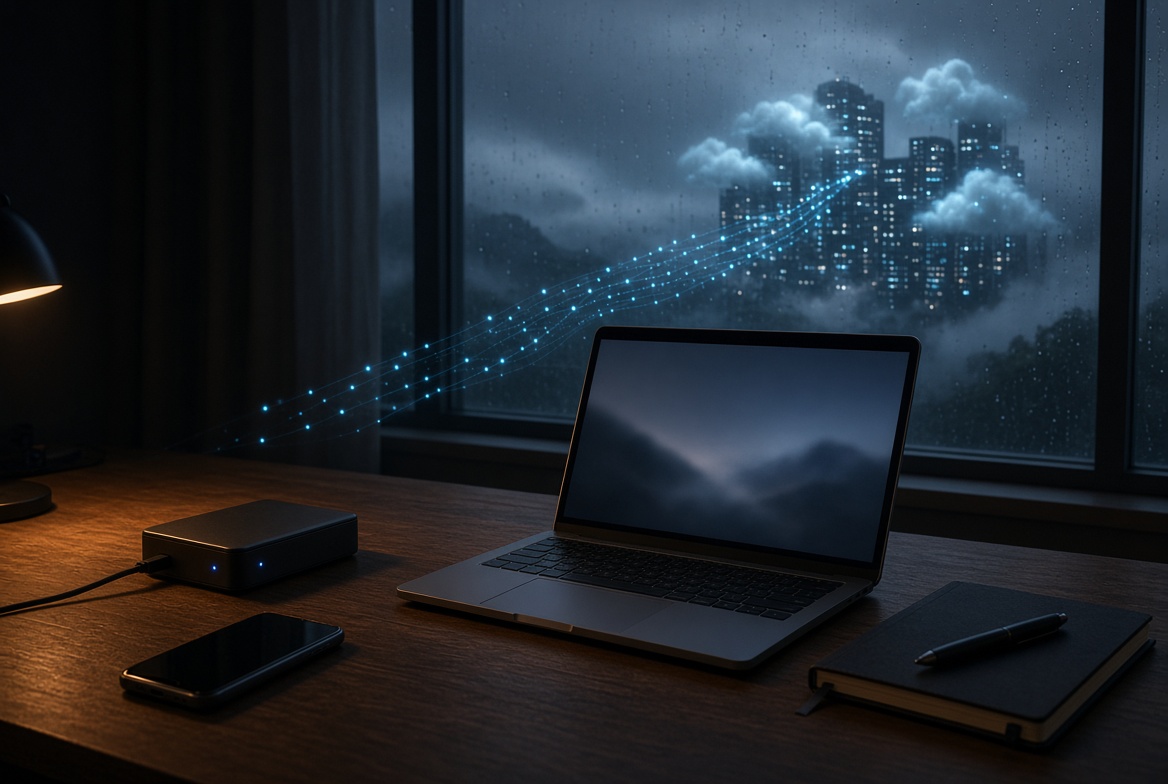
The default is still a lease. Photos in someone else's album. Conversations in someone else's chat log. A router in the living room that can report motion to a provider cloud. Opt-in language does not change the architecture. The record leaves the house.
A government will not send that data. That is not ideology. It is how people with something to lose already treat a stack.
In the first half of 2026, the CNAS Sovereign AI Index counted more new national projects than in all of 2024. The running total sits at 184 projects across 67 countries. Governments are not renting intelligence from a data center in another country anymore. They are treating the weights, the metal, and the data path as infrastructure.
Enterprises bought the same idea as a product. Google expanded on-prem and air-gapped options in Distributed Cloud for customers who need data residency. AI cameras are moving inference onto the device so footage does not have to leave the building. One analysis put the cost drop near 67 percent. The same window produced the reminder that jurisdiction still has teeth: a near-billion-euro GDPR fine against Uber in the Netherlands, and a $400 million U.S. settlement with TikTok over children's privacy.
| Who | The move | What it means |
|---|---|---|
| Nations | 184 projects, 67 countries — more new ones in H1 2026 than all of 2024 | The stack is infrastructure |
| On-prem and air-gapped Distributed Cloud | Data residency is a product | |
| Edge cameras | Inference on the device, ~67% cheaper | Footage stays in the building |
| Home ISP | Router as motion sensor, record in their cloud | The house still phones home |
| Enforcement | Uber GDPR, TikTok $400M | Jurisdiction is visible |
The asymmetry at home
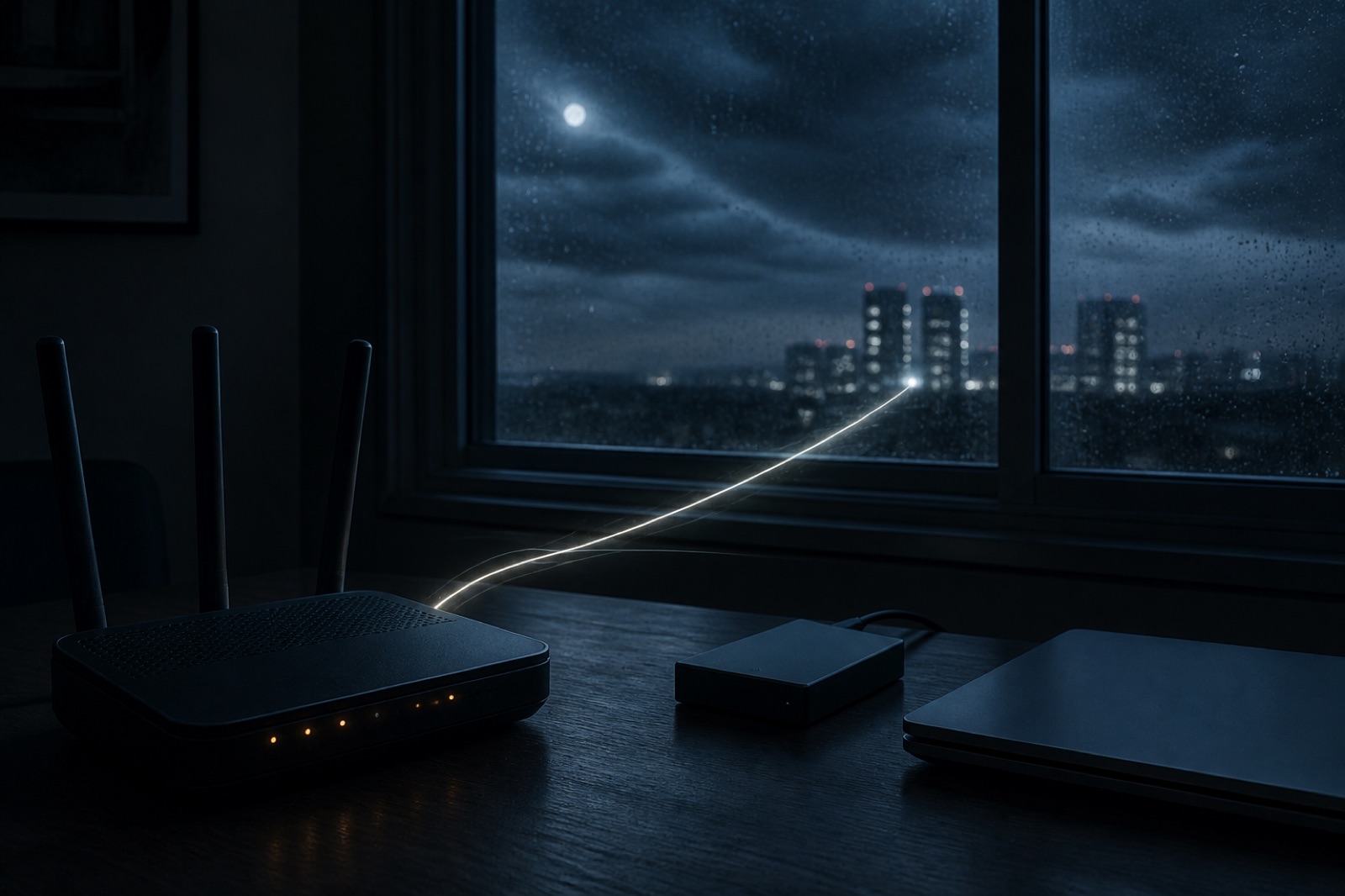
Critical infrastructure is being designed so sensitive material stays local by default. Consumer systems still default to "phone home." Nations fund their own models. Enterprises buy air-gapped rooms so regulated data never crosses a border they do not control. Even the camera vendors now advertise edge processing, because sending every frame to the cloud is expensive and politically awkward.
The consumer default is the old one. The tools to reverse it already sit on a 16 GB laptop. Local models. Local graphs. Apps that run as demos in the browser and as the real product on your machine.
The personal version of the same move
If a government will not send its data to another country's data center, there is little reason to put a lifetime of photos, notes, conversations, and agents in someone else's chat log by default. Keep the data. Run the model where you can. Decide what leaves.
That is the design of the Sci-Fi Labs stack. The Knowledge Graph is a private spatial canvas for memory: photos, conversations, time as depth, on hardware you control. Where is Paul? turns a travel record into a globe and a timeline without parking the raw material on a third-party server. On this laptop the model is Bonsai. Whisper hears. Kokoro JS speaks. The published sites are demos. The product is the copy that runs on your machine.
None of this requires a national AI fund. Offline is the proof. Memory you own, models you run.