Knowledge Graph · Field notes · Part 3 of 3
Knowledge Graph, Part 3: A living interface
The canvas has to earn trust. Same-day photos stay together. The surface is a place, not a changelog. Still 16 GB. Still offline.
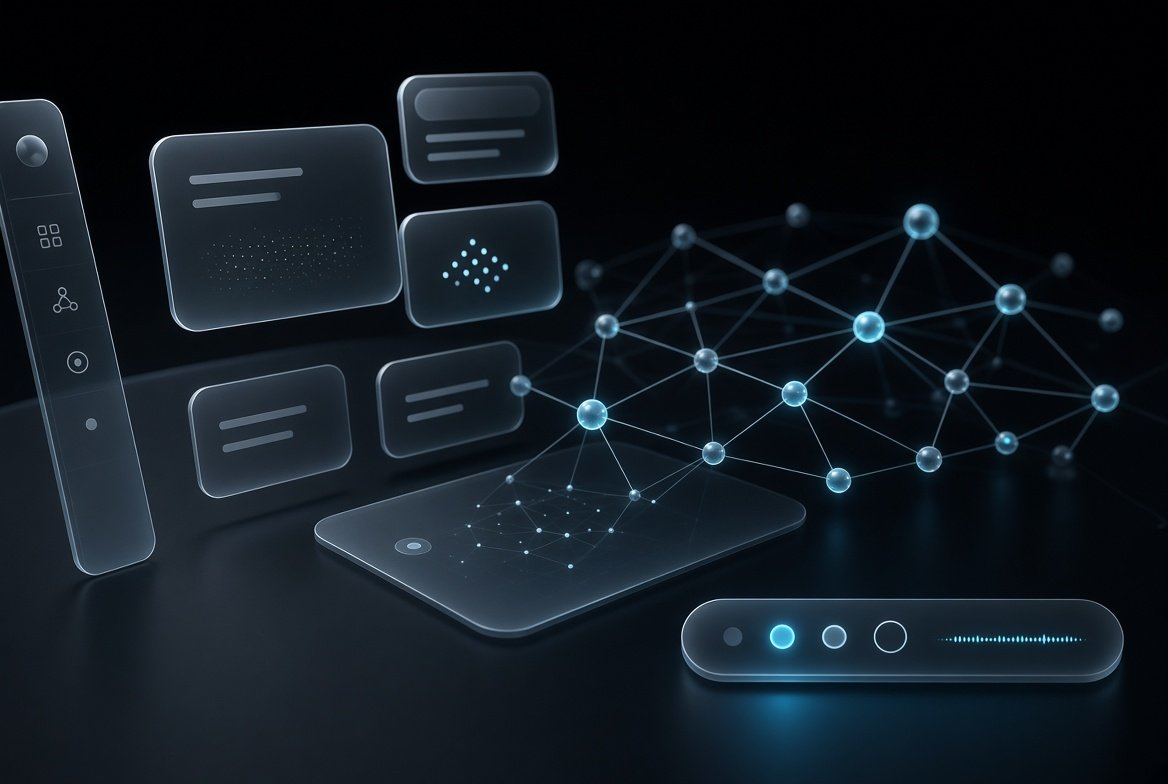
Parts 1 and 2 made the canvas real and the voice pipeline survivable. Part 3 is the surface. If the place looks like a debug panel, nobody stays.
A place has to feel like a place
The visual language is the Sci-Fi Labs one. Glassy panels. Time as depth. Ambient chrome instead of a chat column. One night palette so the canvas, the notes, and the voice belong to the same room. Processing lives in a dock, not a modal that steals the view. Photos wait for the capture date before they pick a day. Those are not polish tickets. They are how a place feels like a place.
Why the graph answers better
Direction is wasted if "what did I do last week" returns a shallow summary. Date queries hit the graph, not a keyword guess. Same-day photos and notes stay together. Notes get their own plane. When the model claims it used a tool, it has to actually call the tool.
Sci-Fi Labs frame
Knowledge Graph sits with Neuro Graph (the public memory network it grew from), Where is Paul?, and Musical Cubes under one thesis: spatial products for web, mobile, and XR. Memory as a place is the constraint. Not a feature list bolted onto a chat window. Not a stack that only works when you rent more RAM. Not an assistant that dies when the network drops.
On this laptop the engine is Bonsai. Whisper hears. Kokoro JS speaks. Open WebUI is a temporary conversation surface. Next step is swapping that window for this canvas. Same models. The place, not the bubbles.