Sci-Fi Labs · Essay
Local AI still looks like a chatbot
You can run the model at home now. The window is still ChatGPT. That is not the only shape memory can take.
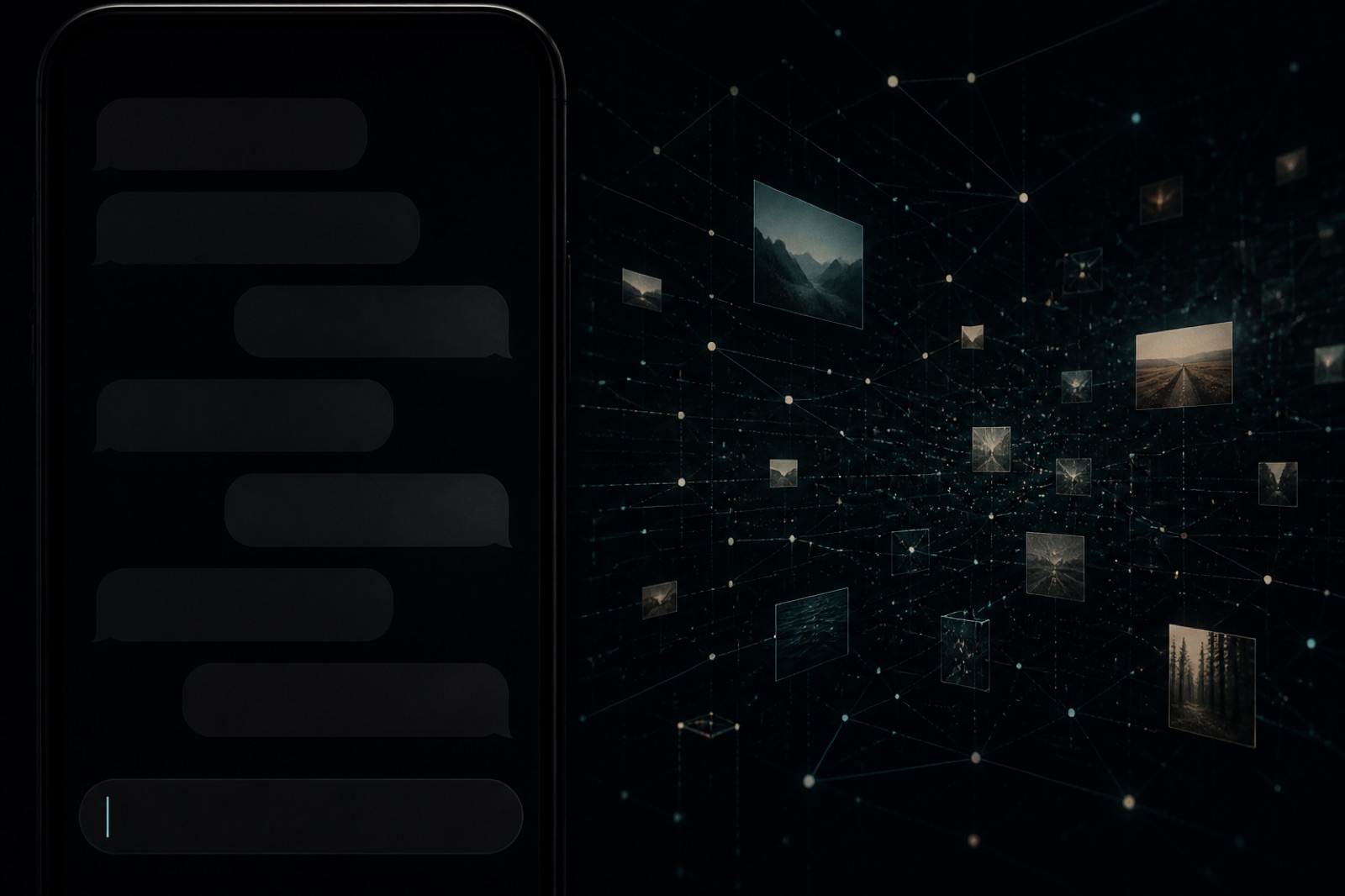
You can run the model at home now. Open WebUI, LibreChat, AnythingLLM, LobeChat, Jan — they proved you do not have to send every prompt to someone else’s region. Ollama and llama.cpp handle the weights. Then you open the app and you are still in ChatGPT’s window. A text box. A scroll of bubbles. Memory as a transcript.
What the current tools actually ship
Open WebUI is the largest community option: chat, collections, tools, air-gap patterns. LibreChat is the team workbench. AnythingLLM is the document specialist. LobeChat is polish and plugins. Jan is the offline desktop client. Those projects matter. They also share one design assumption: the primary surface is a chatbot.
| Tool | What it is | Surface |
|---|---|---|
| Open WebUI | Largest community option | Chat |
| LibreChat | Team workbench | Chat |
| AnythingLLM | Document specialist | Chat + docs |
| LobeChat | Polish and plugins | Chat |
| Jan | Offline desktop client | Chat |
| Knowledge Graph | Spatial memory | 3D canvas |
You type. The model replies. History is a scroll. Documents become context for the next message. That pattern works. It is also the pattern ChatGPT trained the world on.
Why a canvas is a different product
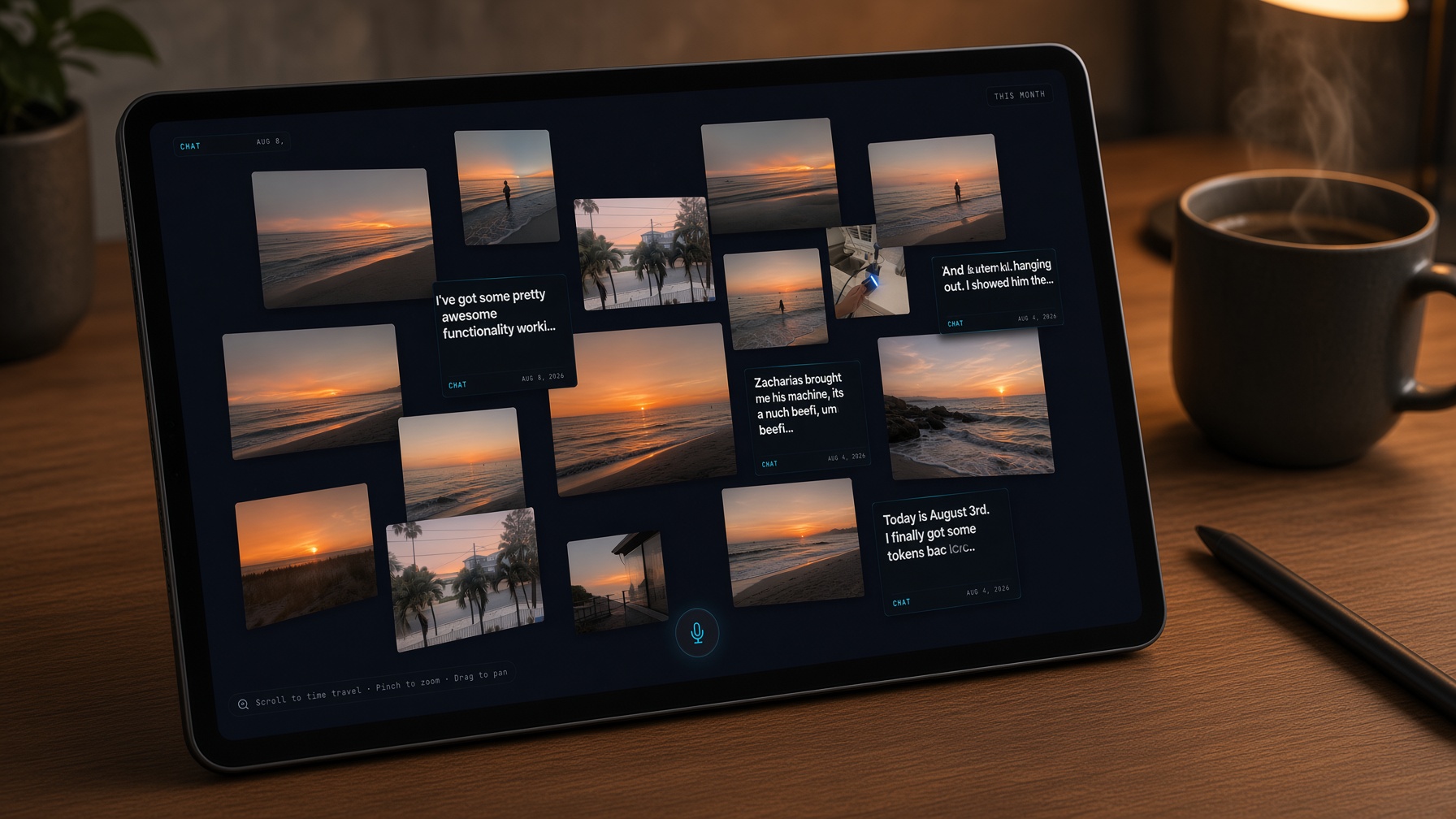
The Knowledge Graph starts from a different question: what if photos, notes, conversations, and later video and audio were not buried inside threads, but laid out in space you can navigate?
Time becomes depth. A month is a place you fly to. A conversation is a node you land on, not only a transcript you re-read. Retrieval is not “paste more context into the box.” It is moving the camera to the region that already holds the answer.
That is closer to how people already think about their lives: places, periods, people, artifacts. It is also closer to what spatial computing and XR make possible once the UI is not glued to a phone-shaped chat column.
| Chat stack | Knowledge Graph | |
|---|---|---|
| Memory | A transcript you re-read | Place, time as depth |
| Retrieval | Paste more context into the box | Fly the camera to the region |
| Product | Cloud shape, local server | Local shape, local server |
Sovereignty without a new chat clone
If the only way to use a local model is still a chatbot, you have moved the server and kept the product shape of the cloud apps you were trying to leave. Open WebUI’s framing is useful: sovereignty is control over infrastructure, data path, models, identity, and audit. The same principle applies to the interface.
Sci-Fi Labs is building the personal version of that control as a spatial stack. Knowledge Graph is the memory layer. Where is Paul? is a life map. Musical Cubes is interaction as something you turn in 3D. The published sites are demos. The product is the copy that runs on your machine.
You can pair that surface with the same local runtimes everyone else uses. The point is not to reject Open WebUI or LibreChat. It is to notice that “self-hosted” and “still a chatbot” are two different design decisions.