Hello, I'm
Paul Visciano
Take over the OS. Run a local AI. Build your own apps. Take back your data.
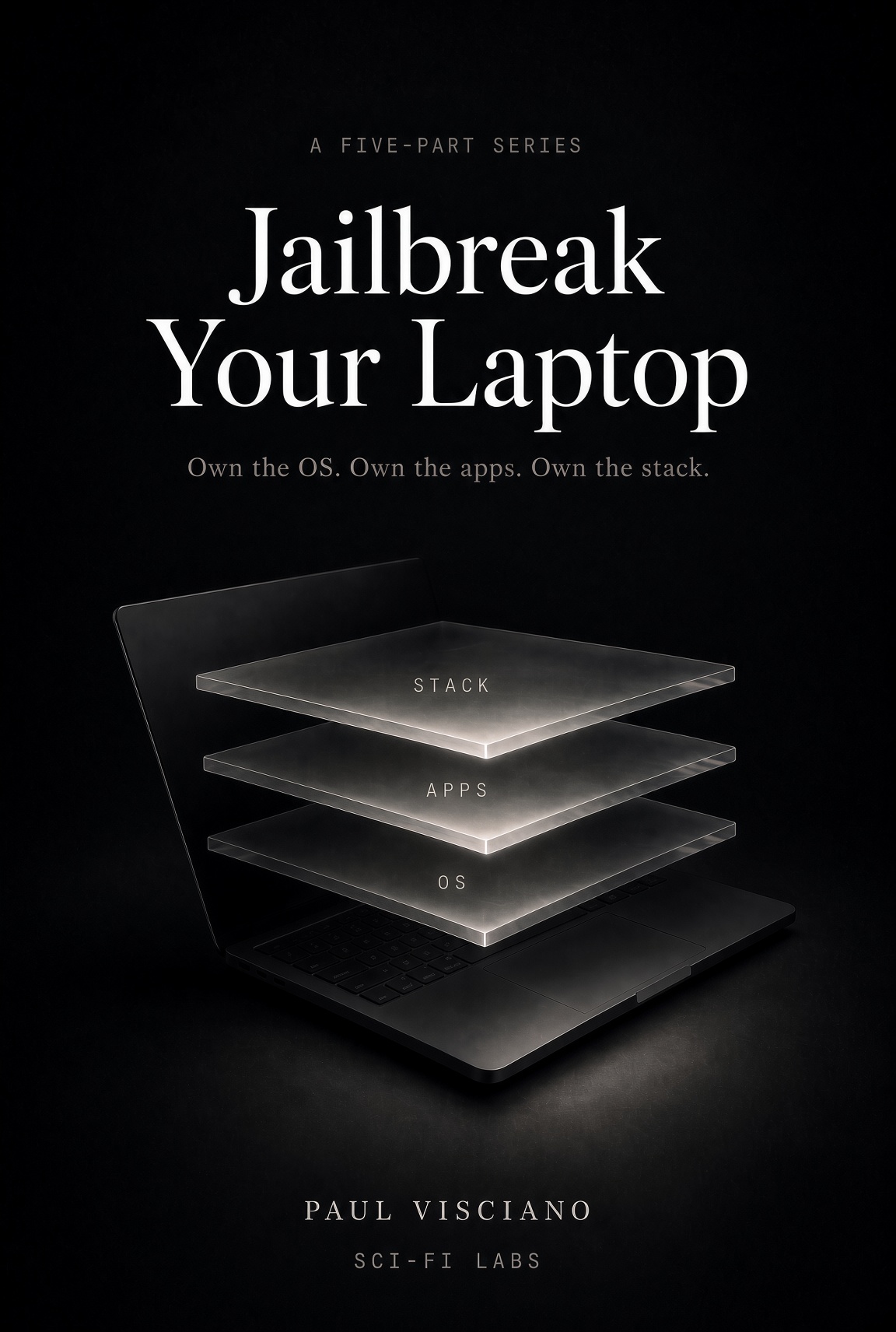
- 01 Take Over the Machine Strip the vendor's assumptions and install an OS you control.
- 02 Run Local AI Model, memory, and voice on localhost — nothing in the cloud.
- 03 Create Your Own Site Deploy a site you actually own — a public face no platform can take away.
- 04 Build Your Own Apps Shape the desktop and the tools until the machine talks back.
- 05 Graduate to Creator Ship your first original app — publishing on your own terms.
Same URL on a phone, a desktop, and Vision Pro. Built on the machine you own — no app store, no subscription, software that answers to you.
Notes and books from the sovereignty bet.

The Kybalion
A study of the Hermetic philosophy of ancient Egypt and Greece.
Read the book →
The Game of Life and How to Play It
Whatever man sends out in word or deed will return to him.
Read the book →
Hermetic Principles — The Keys to Mastering Your Mind
Master your mind to master the universe. Seven principles from The Kybalion, used on a real Tuesday.
Read article →
Thoughts on Skill Erosion
Mustang drivers refuse the Cybercab. Give the driving to AI and the AI is what drives the car.
Read article →
The Golden Handcuffs
Your Tesla is already recording you. Not the Robotaxi — your car. Sentry Mode, eight cameras, ten million rolling sensors.
Read article →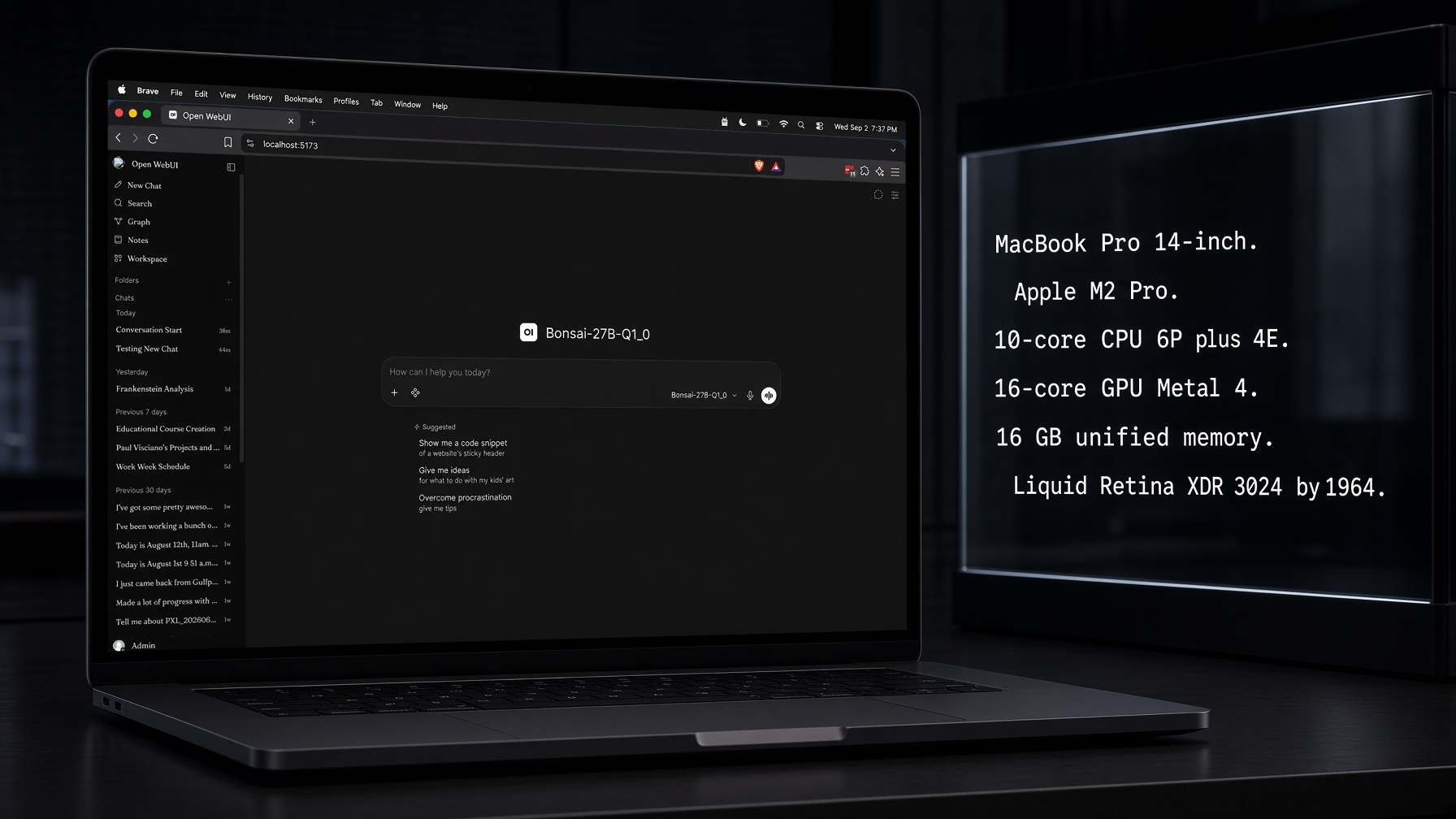
Talk to a Local AI on a 16 GB Mac — and Keep Using It
27B model, Whisper, browser, coding session. 14.73 GB used. Pressure green. Daily use still fits.
Read article →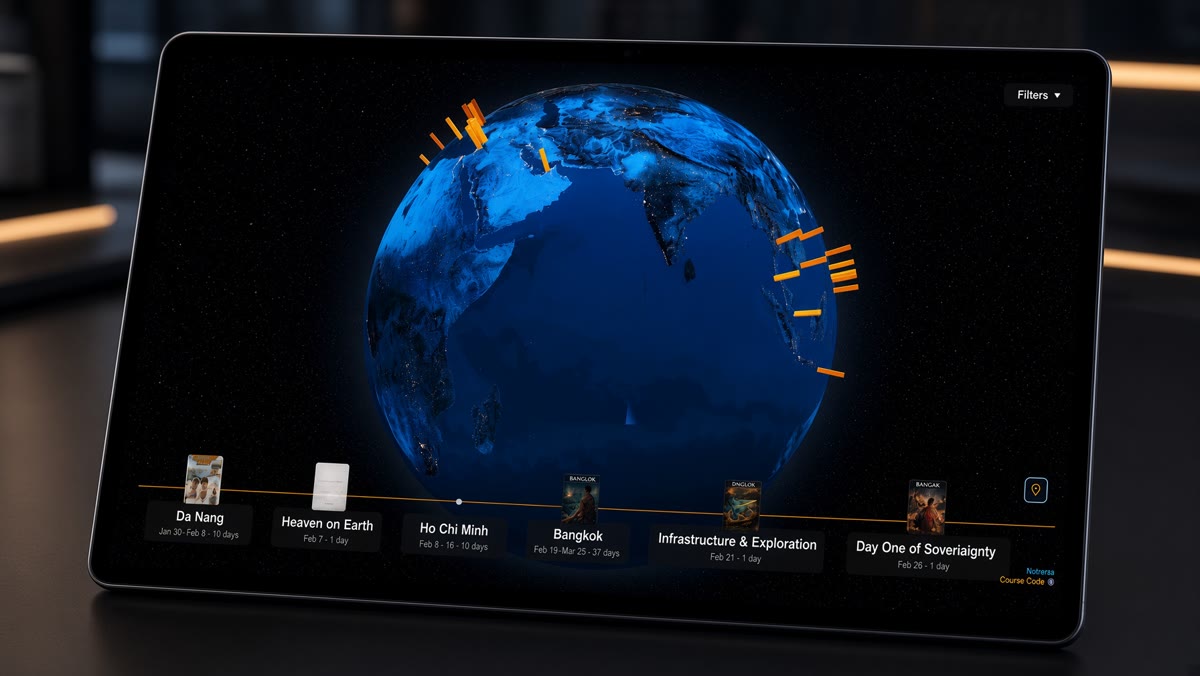
Where is Paul?
A living spatial record of a life — globe, comics, voices, and QR codes that open the real place.
Read article →
What are Spatial Web Apps?
Same URL on a phone, a desktop, and Safari on Vision Pro.
Read article →
Omarchy — DHH's tiled Arch desktop
A consumer OS keeps a thousand processes you never named. Omarchy is a tiled Arch desktop with AI as a key you can also take off. The same idea should land on a phone.
Read article →
Bitcoin is an immutable Git repo
Every transaction is a signed commit. The history is chained. And rewriting the past costs more than the whole repo is worth.
Read article →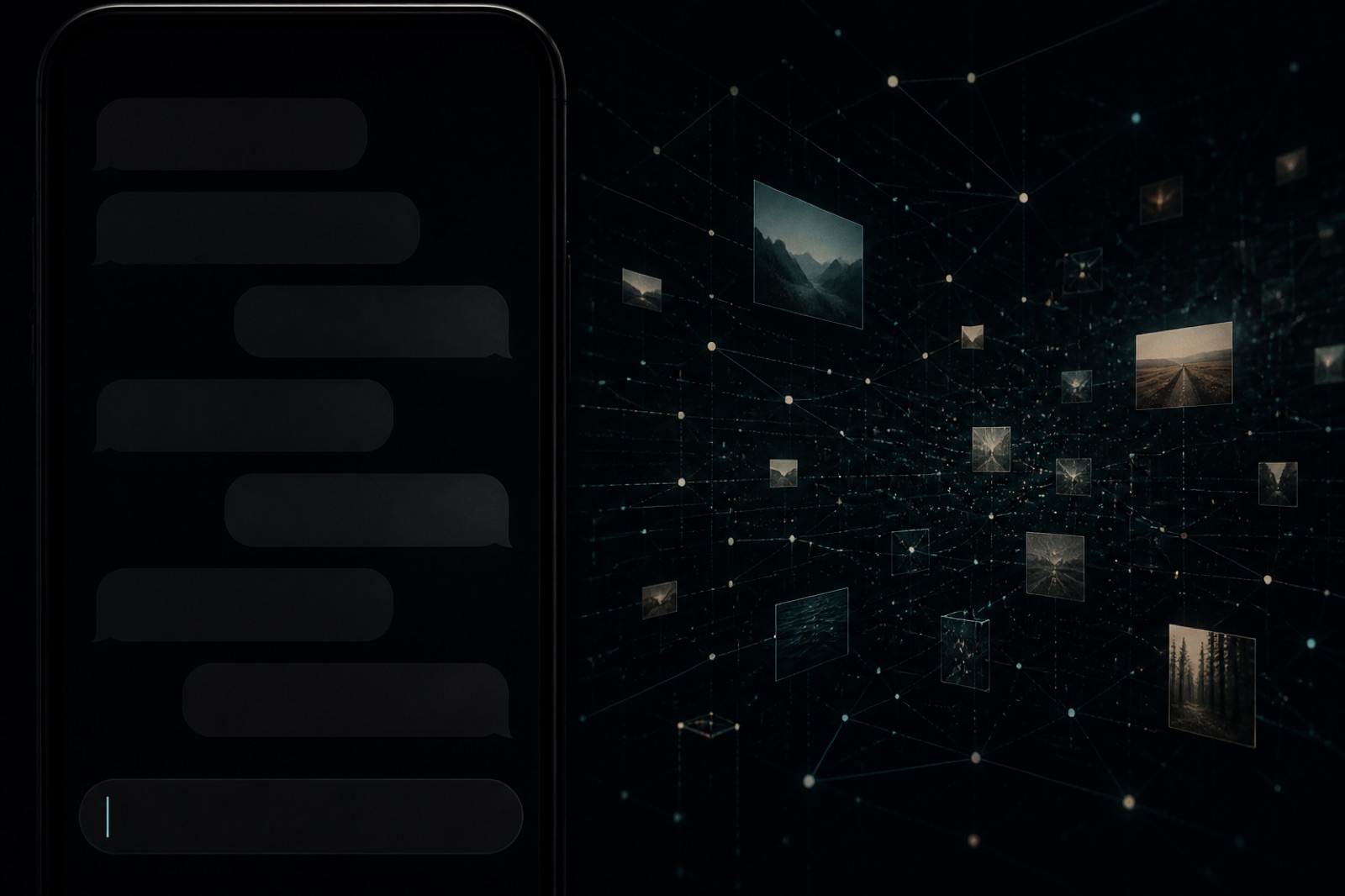
Local AI still looks like a chatbot
You can run the model at home now. The window is still ChatGPT. Knowledge Graph is a 3D canvas of conversations, photos, and documents.
Read article →
Data sovereignty is moving to the edge
A government will not send its data to another country's data center. A living-room router still does. The stack on this desk is the personal version of that move.
Read article →
The local agent that can answer “what have I been up to?”
Retrieval was the missing piece. Knowledge Graph returns photos and notes for a date range and flies the canvas to the right month — offline.
Read article →
Surveillance Pricing
The FTC is looking at personalized pricing. Local graphs are the quiet refusal.
Read article →
Local TTS on 16 GB — the voice quality gap
Open WebUI + Bonsai + Whisper work. The first TTS install sent the day into a chase. Kokoro JS was already there, and that is what shipped.
Read article →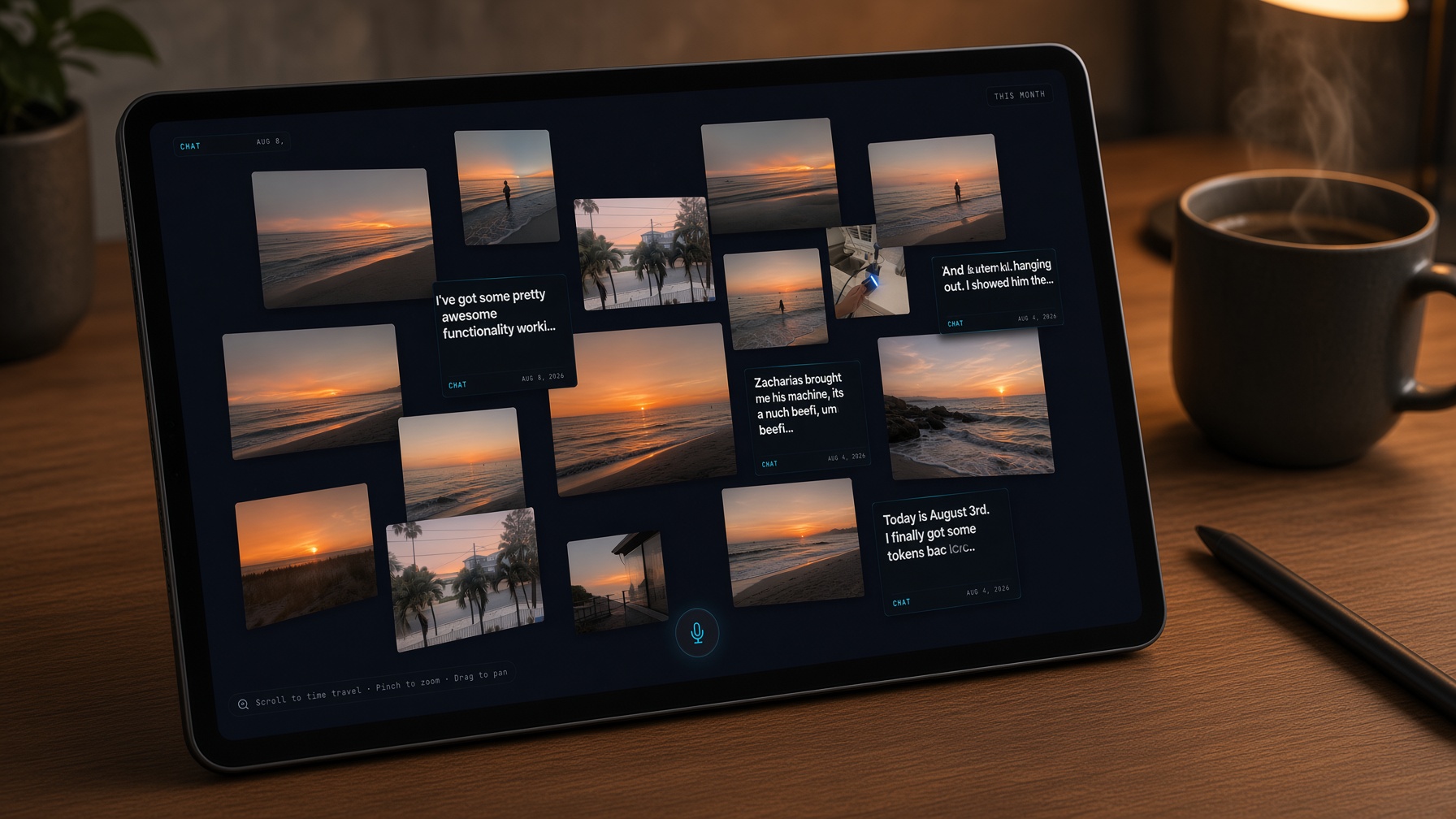
Knowledge Graph
AI without the chat window — a private spatial canvas for memory on hardware you own.
Read article →Musical Cubes
Tracks as rotating 3D cubes — each face an instrument stem you can play, loop, and sync.
Read article →About

Now I design and build the full stack myself — web, mobile, and XR — using AI as a collaborator. Through Sci-Fi Labs the goal is the same: turn science-fiction ideas into real products, and push web technologies past their usual limits.
Underneath it all is a longer bet. Sovereignty. Memory you own. Models you run. Tools that answer to you — not rented, not watched, public only when you choose.
Before going independent, I was a Principal Engineer at OutSystems — the AI-powered low-code platform used by more than a thousand enterprises worldwide. I moved there specifically to work closer with the Ionic team after the acquisition, and did: design systems, shared UI, and the patterns teams reuse so enterprise software doesn't reinvent itself on every project. That work crossed into Stencil.js. I partnered with Apple to implement features for their internal design system built on Stencil, and contributed to the open-source project directly.
Before that, more than a decade at Paylocity on Core Mobile — the app employees open to clock in, request time off, and check a paycheck. Paylocity is a leading cloud HCM platform serving roughly 44,400 companies and millions of people. We rebuilt the mobile stack more than once on Ionic and Xamarin so other teams could ship without fighting the platform.
Contact
A note is welcome.
If you want to reach me, write.